
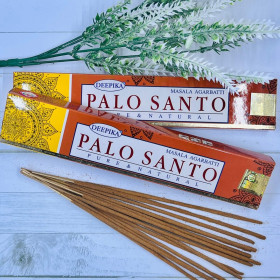
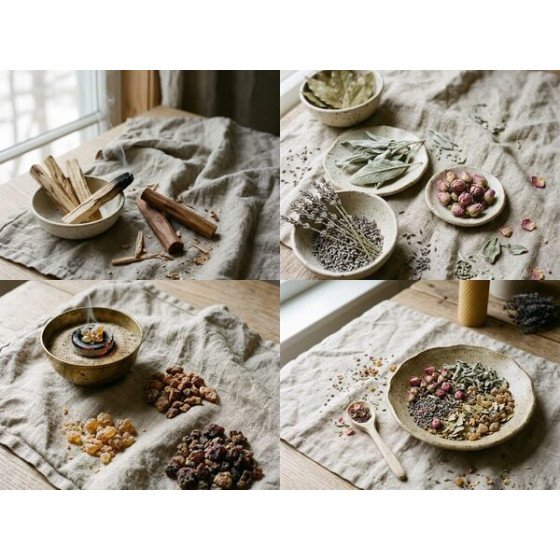
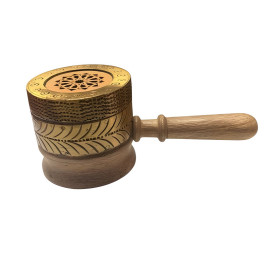







What is palo santo?
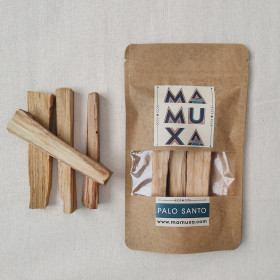
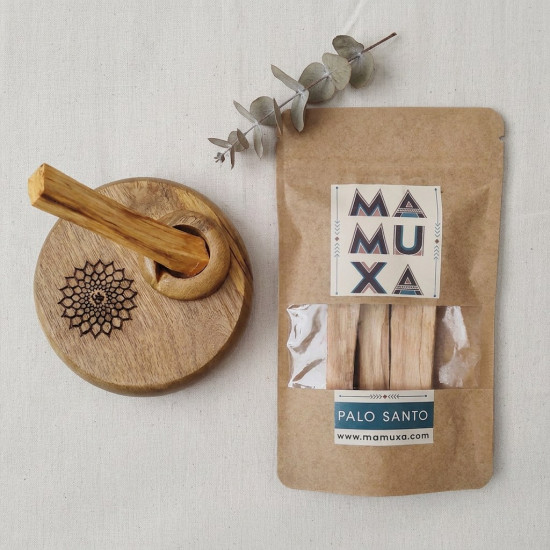
Palo santo is incense wood from the Bursera graveolens tree, which grows in South America. Its scent comes from the tree's own resin. The tip catches with a short flame, then smoulders slowly once blown out, leaving a sweet, resinous scent of lemon and pine in the room.

- Tree
- Bursera graveolens, the same family as frankincense and myrrh
- Origin
- Ours is from Peru
- Scent
- Lemon and pine; sweet, resinous and woody
- How to use
- Light the tip for 30 sec–1 min, then blow it out
What is palo santo?
Palo santo is incense wood cut from the Bursera graveolens tree, which grows in South America. Unlike stick incense, there is no glue and no carrier stick. The wood is resinous, so when the tip catches for a moment and is then blown out, it smoulders slowly and leaves its scent in the room.
In South America, palo santo is traditionally burned at home, in ceremonies and in daily rituals. Today many people like to light it before meditation or yoga, when moving into a new home, or in a quiet moment they keep for themselves in the evening. Mamuxa's story began with this scent too, in 2018.
What does palo santo smell like?
Sweet, woody and resinous, with a fresh scent of lemon and pine. You can smell it even before lighting, just by holding a stick close. When it burns, the scent grows warmer and rounder.

Where does palo santo come from?
Bursera graveolens belongs to the same family (Burseraceae) as frankincense and myrrh. It grows in the tropical dry forests of the Americas, especially along the coasts of Peru and Ecuador; it does not grow wild in Turkey.
In Peru, gathering and trading palo santo requires a permit from SERFOR (Peru's National Forest and Wildlife Service).
Is palo santo endangered?
The International Union for Conservation of Nature (IUCN) lists Bursera graveolens as "Least Concern" on its Red List (2019). Stories that "palo santo is endangered" usually come from mixing it up with another tree of the same name: Bulnesia sarmientoi, which grows in the Gran Chaco region.
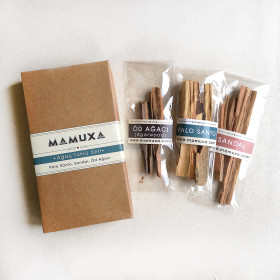
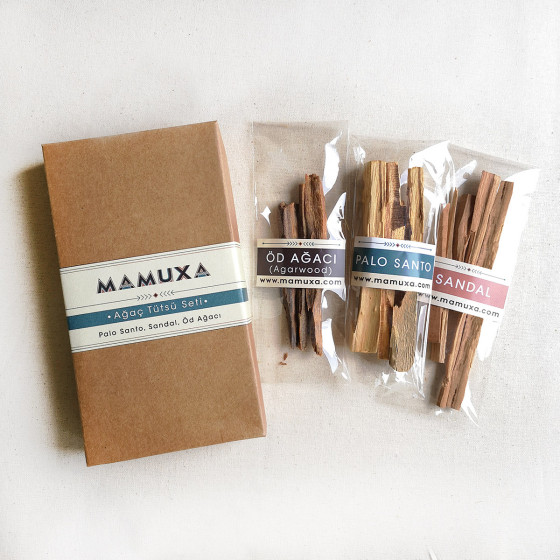
Mamuxa's palo santo
The palo santo at Mamuxa is from Peru.
Our sticks are about 10–11 cm long on average, and each one is a little different. If you have any questions, you can write to destek@mamuxa.com.tr.
How to tell real palo santo
Not everything sold as palo santo is the same; some are pieces of another wood with fragrance brushed on. The signs below can give you an idea; none of them is proof on its own, so look at them together.
- It smells before you light it. You can smell the resinous scent without lighting the stick. If the scent sits only on the surface and is sharp like perfume and quick to fade, be wary.
- The colour and texture look like plain wood. Somewhere between pale beige and yellowish brown, with a fibrous, woody look. An evenly dyed, shiny or oily surface is unusual.
- Every stick is a little different. Length and thickness vary from stick to stick, and you can see the grain along the edges.
- It burns gently. The tip catches with a short flame, smoulders slowly once blown out, and can be relit several times.
How to burn palo santo
A stick isn't used up in one go; you can use the same stick many times.


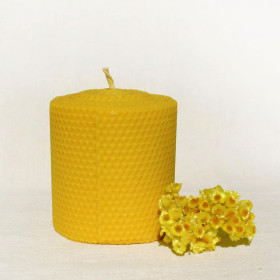
When you'd like to use it again, simply repeat the same steps. If you'd like to try palo santo together with a beeswax candle and dried flowers, the Mamuxa Incense Set, Palo Santo brings them all together.
Start with palo santo
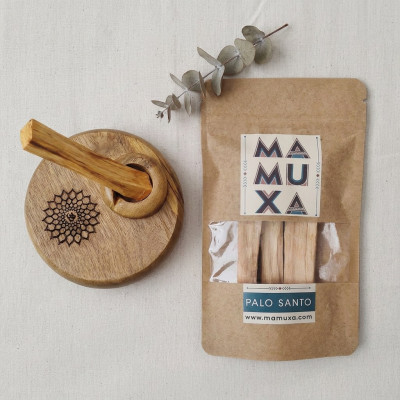
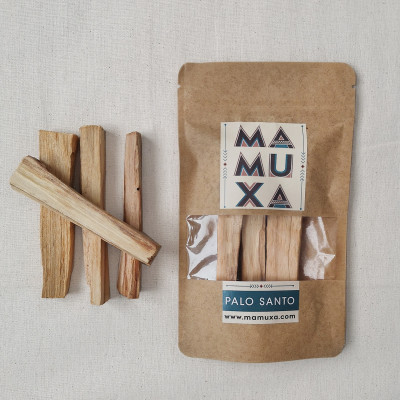 Palo Santo Incense Wood395.00 TL
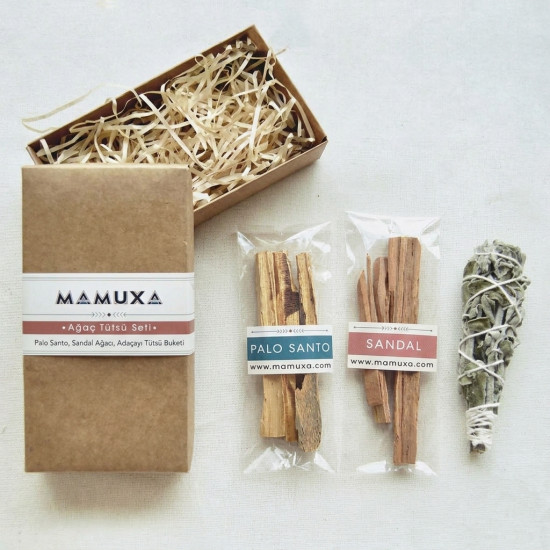
 First Incense Set: Palo Santo590.00 TL
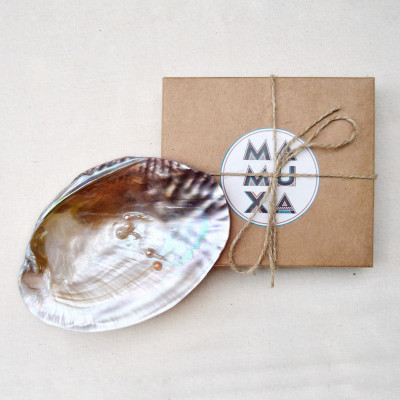 Makabe Seashell Incense Holder with Pearls600.00 TL
Safe use
- Never leave a burning or smouldering stick unattended; keep it away from children and pets.
- Don't breathe the smoke in directly or hold it close to your face.
- Air the room during and after use.
- If you are pregnant, breastfeeding, or have asthma or a respiratory condition, please ask your doctor before use.
- Use it on a heat-proof surface, away from flammable things such as curtains and paper, and away from food.
- Make sure the stick has gone out completely before you put it away.
How to store palo santo
Keep the sticks in a closed box or a cloth pouch, somewhere dry, cool and out of direct sunlight. Damp makes the stick harder to light; sun and open air can make the scent fade over time. Once the stick you've used has gone out completely, you can put it back with the others.
Frequently asked questions
What is palo santo used for?
Palo santo is incense wood; people burn it to bring a lovely scent into their home. In South American traditions it is believed to freshen a space, and it is used in rituals. It is not a medical product.
What does "palo santo" mean?
In Spanish, "palo" means a piece of wood or a stick, and "santo" means holy; palo santo means "holy wood". In Turkish, too, the name is used as it is for both the tree and the incense.
How many times can I use one stick?
It depends on the thickness and on how long you burn it each time. With short burns, you can usually use one stick many times.
Is palo santo smoke harmful?
Like any incense, palo santo gives off smoke when it burns, and the smoke can irritate your airways if you breathe it in. Don't breathe the smoke in directly, don't burn it for long in small, closed rooms, and air the room after use. If you have asthma or a respiratory condition, or if you are pregnant or breastfeeding, please ask your doctor before use. Never leaving burning incense unattended and using a heat-proof dish are the two most important ways to prevent fire.
Why is palo santo sometimes hard to light?
If the stick has got damp, or the tip has already charred, it takes longer to catch. You can clean a charred tip by rubbing it gently on a heat-proof surface, and keep your sticks somewhere dry.
What is the difference between palo santo and sage?
Palo santo is a piece cut from a tree; it smells sweet and resinous. Sage is a bundle of dried herbs; its scent is fresh and clean. To try the two together, take a look at our mini sets.
Where can I buy palo santo?
You'll find palo santo sticks from Peru on the Palo Santo Incense Wood page, and our other incense woods in the Incense Wood category. Sticks, sets and palo santo holders are all together on the Palo Santo page. Shipping is free on orders of 1.500 TL and over.